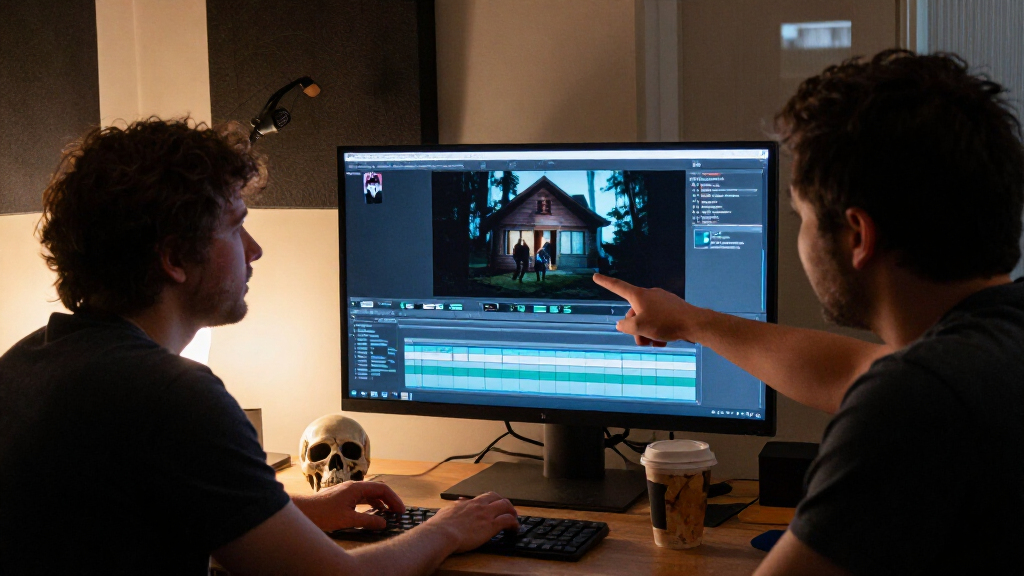

🔍 Read the full analysis: From Boring Draft To Horror-Comedy: The Making Of Hollow House on ThorstenMeyerAI.com

Get hardware and tech essentials delivered free with Prime
- Fast, free delivery on millions of items
- Prime Video, Amazon Music and more included
- Member-only deals all year
TL;DR
Hollow House, a 97-second AI-generated horror-comedy, was made in three versions between the evening of Oct. 27 and about 1:30 a.m. Oct. 28, according to its creator. The production account says the first two edits did not work, and that changing the pace and using one video model with the full cast as references shaped the final cut.
Hollow House, a 97-second horror-comedy made with AI-generated characters, voices and sets, was completed after its creator produced three versions overnight, according to a behind-the-scenes account published Oct. 28. The account says the first cut looked polished but felt boring, leading to changes in editing pace and the way the cast was supplied to the video-generation model.
The account by Thorsten Meyer says work began in the early evening of Oct. 27 and continued until about 1:30 a.m. the next day. The final short runs 1:37. The premise puts a real ghost to work at an extreme haunted attraction, where staff respond to the supernatural problem as if it were a workplace matter: when a guest says the safe word, the scares should stop, but the ghost does not stop.
Meyer describes three versions. The first used 20 generated shots and ran 2:15. A second, faster edit used 66 cuts and ran 2:21. The final version consists of three roughly 30-second segments generated with one model that had reference images of the whole cast. Meyer says only the third version worked as a film; the production account does not provide independent verification of the process.
To keep the characters visually consistent, the team first made reference images for eight characters using Nano Banana 2 through Higgsfield. For the first cut, it generated still frames with those references and animated them using Google’s Veo 3.1 fast mode. Meyer says the result maintained faces, costumes and the haunted-house color palette, but its average shot lasted 5.6 seconds. The short that inspired the project, by his count, averaged about 1.8 seconds per cut.
The account says the production used 2,220 Higgsfield credits across the three versions, which Meyer estimates at about $95 under the plan’s pricing. It also reports about 2,100 ElevenLabs characters for music and sound effects. These are the creator’s stated production figures; the account does not itemize the credit use by version or provide a separate cost audit.
Behind the scenes · October 28, 2026
From Boring Draft
To Horror-Comedy
How Hollow House found its rhythm. The 97-second AI-generated short took three versions and an overnight production sprint. Its creator says the turning point was the edit: faster pacing, a shared cast reference, and deliberate human choices.
01 / Three cuts to the story
Each version solved a different problem
Meyer says the first cut looked consistent but felt slow. A faster second edit still missed. The third approach became the published film.
Polished, but too slow
Built from generated stills animated with Veo 3.1 fast mode. Faces, costumes, and the haunted-house palette held together, but the longer beats softened the comedy.
Creator’s verdict: “boring”More cuts, still not there
The edit moved faster, but Meyer says this version still did not work as a film. The production account does not provide a full side-by-side comparison.
Creator’s verdict: rejectedA shared cast, one model
One video model received reference images of the whole cast. The resulting 1:37 cut was the version Meyer says finally worked as a film.
Published · Oct. 28The comparison is Meyer’s own count of the short that inspired the project. The account does not state the final cut’s average shot duration.
02 / From character sheets to final cut
A production built through iteration
The premise turns a haunted attraction’s safety rules into workplace comedy: a guest says the safe word, but the real ghost keeps going.
Build the cast
Eight character reference images were made with Nano Banana 2 through Higgsfield to limit visual drift between shots.
Identity referencesGenerate the scenes
For the first version, each of 20 shots began with a generated still, then was animated with Veo 3.1.
Images → videoCheck the lines
Meyer says Whisper checks caught speech errors, including “HEY!” read as separate letters and extra syllables in a ghost’s line.
Listen · review · reviseRework the edit
The final version used three segments with the full cast supplied as references. Meyer also cites a final color grade.
Three versions → finalOn-set problem solving, AI edition: The creator reports that spoken lines and planned physical actions sometimes needed alternate framing, wording, or retakes—including a head turn, levitation attempt, and backward bend.
03 / What changed the film
Image quality was only part of the work
The account frames pacing as the main obstacle. Attractive images did not determine when a joke landed or how quickly a scene moved.
Rejecting a “good-looking” cut
Meyer describes the first version as visually consistent, yet too slow and amateurish in feel. Choosing to discard it was part of the process.
Give one model the whole cast
The final approach supplied shared references for the cast to a single video model. The provided account does not name that model.
Shape the timing and the grade
Editing pace, alternate solutions for difficult actions, and a final color grade were creator decisions in a workflow using generative tools.
One short, not a universal formula
This production account shows how iteration shaped Hollow House. It does not establish that the same method will work for other films.
“terribly boring and amateurish”
Thorsten Meyer, on the first version
04 / Reported production figures
Useful numbers, with limits
All figures below come from the creator’s behind-the-scenes account. They are reported production details, not an independent audit.
2,220 credits
Reported across all three versions. Meyer estimates this at about $95 under the plan’s pricing; use by version is not itemized.
~2,100 characters
Reported ElevenLabs character use for music and sound effects. The account does not clarify whether this covers every sound element.
8 characters
The account says each 2K image cost two credits and the set was made in under two minutes.
05 / What the account does not establish
Keep the claims in context
The process details are Meyer’s account of making the short. Several production and reception questions remain open.
The timeline, tool use, credit total, and estimated cost are not independently verified in the source material.
The account does not compare all three cuts in detail or explain the color grade, final model, and post-generation changes shot by shot.
No audience figures or reception data are provided. The account does not announce a sequel or another release.
06 / At a glance
The story behind Hollow House
What is Hollow House?
A 1:37 horror-comedy about a ghost joining the scare crew at an extreme haunted attraction. Its creator says its characters, voices, and sets were AI-generated.
How many versions were made?
Meyer reports three versions made overnight, from the first 20-shot cut through a 66-cut edit to the final short.
What changed in the final approach?
The creator says the final version used three segments generated with one model supplied with references for the full cast. The model is not named in the provided account.
When was it made?
Work reportedly began in the early evening of October 27, 2026, and continued until about 1:30 a.m. on October 28. The behind-the-scenes account was published October 28.
Source note: This infographic summarizes the creator’s behind-the-scenes account as provided. It does not independently verify the reported workflow, timing, or costs.
Why the Edit Changed the Film
The production account frames pacing, not image quality, as the central obstacle. Its first version looked visually consistent, Meyer says, but the longer shots and one-line exchanges left the comedy without the quick rhythm the creator wanted. That distinction matters for AI-made video: generating attractive images did not, in this case, settle the basic editorial problem of when a joke lands or how quickly a scene moves.
The process also illustrates the continuing role of human decisions in a workflow built around generative tools. Meyer identifies the choices to reject the first cut, provide a shared cast reference to a single model for the final version, and apply a final color grade as decisive. The account does not establish that this method will work for other projects, but it offers a specific example of how iteration and editing shaped one short film.
For viewers, the production details help explain both the short’s style and its limits. The creator reports problems with spoken lines and planned physical actions, and says some material needed workarounds or retakes. The finished short is presented as a horror-comedy, but the account’s production claims should be understood as the filmmaker’s description rather than an independent evaluation of the film or its tools.
Products Worth Considering
Apple MacBook Pro 16.2-inch with M5 Pro, 18-core CPU, 20-core GPU, 48GB Memory, 1TB SSD, Wi-Fi 7, Space Black

Apple MacBook Pro 14‑inch (2021) with M1 Pro, 16 GB RAM, 512 GB SSD – Space Gray

Logitech MX Master 4 for Mac, Ergonomic Bluetooth Mouse with Haptic Feedback, Ultra-Fast Scrolling, USB-C Charging, for MacOS, iPadOS, Windo
As an affiliate, we earn on qualifying purchases.
From Character Sheets to Final Cut
The concept uses the conventions of an extreme haunted attraction, where guests sign waivers and can use a safe word to stop the scares. In Meyer’s version, a guest named Derek says “cotton candy,” but the danger continues. Staff members realize the tall figure is not one of their performers, while shift lead Ray asks whether the newcomer signed a waiver. The account says the script, characters and jokes were created for Hollow House, while the short’s structure was inspired by an AI horror-comedy shared on X.
Before generating video, the team prepared a reference image for each of eight characters. Meyer says each image cost two credits at 2K resolution and that all eight were made in under two minutes. The references were intended to limit visual drift, such as a character’s hair or costume changing between shots.
In the first version, each of 20 shots had a generated starting frame, then was animated with Veo 3.1. The account says Veo generated speech and sound alongside the visuals. Meyer reports that speech-recognition checks with Whisper caught errors, including a shouted “HEY!” being spoken as the individual letters and extra syllables in a ghost’s line. The creator also describes generation difficulties with a full head turn, a levitation attempt and a backward bend, and says the final production used alternate framing or wording for some effects.
“terribly boring and amateurish”
— Thorsten Meyer, creator of Hollow House
What the Account Does Not Establish
The production details come from Meyer’s own account; the source material does not include independent confirmation of the timeline, tool use, credit total or estimated cost. It also does not give a full comparison of the three versions, explain how the final color grade was completed, or provide audience figures and reception for the published short.
The account says the final version used three segments from one model with the cast supplied as references, but does not name that model in the provided material. It is also unclear how much of the final cut was generated in one pass, how much was edited or altered afterward, and whether the stated ElevenLabs character count covers every sound element. The account does not include enough detail to assess licensing, rights or the tools’ precise contribution to each finished shot.
The Published Short and Its Process
Hollow House is already published as a 1:37 Halloween horror-comedy short, with a behind-the-scenes account dated Oct. 28 describing how it was made. The source material does not announce a sequel, another production, or a planned release date for additional footage.
For now, the next point of reference is the short itself and any further production material Meyer may choose to share. Until additional details are published, the reported timeline, cost and workflow remain those supplied by the creator, and the wider response to the film is not established by the source account.
Key Questions
What is Hollow House?
Hollow House is a 1:37 horror-comedy short about a ghost joining the scare crew at an extreme haunted attraction. Its creator says the characters, voices and sets were AI-generated.
How many versions were made?
Meyer reports making three versions overnight. The first used 20 shots, the second 66 cuts, and the third became the 97-second final short.
What changed between the first version and the final cut?
The creator says the first edit averaged 5.6 seconds per cut and felt too slow. The final version used three segments generated with one model supplied with references for the full cast, though the account does not provide a complete technical breakdown of the final edit.
How much did the production cost?
The account reports 2,220 Higgsfield credits, estimated by Meyer at about $95 at his plan price, plus about 2,100 ElevenLabs characters for music and sound effects. These are creator-reported figures, not an independently audited budget.
Where did the idea come from?
Meyer says the short’s structure was inspired by an AI horror-comedy shared on X, while the script, characters and jokes for Hollow House were his team’s own. The account does not identify the earlier short by name.
Source: ThorstenMeyerAI.com