
📊 Full opportunity report: How Thinking Machines’ Inkling Is Shaping Artificial Intelligence on ThorstenMeyerAI.com — validation score, market gap, and execution plan.
TL;DR
Thinking Machines unveiled Inkling, a large, open-weight, multimodal AI model, emphasizing transparency and open licensing. The release challenges industry norms around proprietary models and highlights the cost of ownership versus rental.
Thinking Machines has publicly released Inkling, a 975-billion-parameter, open-weight foundation model, making it available on Hugging Face under the Apache 2.0 license. This marks a significant development in AI openness, as the company openly shares the full model weights and emphasizes transparency about its capabilities and limitations.
Inkling is a Mixture-of-Experts transformer with a 66-layer decoder-only architecture, supporting a 1-million-token context window. It was trained on 45 trillion tokens across text, images, audio, and video, and is natively multimodal, processing inputs like audio as spectrograms and images as pixel patches, all from scratch.
The model’s full weights are available under the Apache 2.0 license on Hugging Face, allowing users to download, modify, and deploy independently. The training process included a hybrid optimizer and over 30 million reinforcement learning rollouts, with performance improvements over time.
However, the release is accompanied by a Model Acceptable Use Policy (AUP), which reportedly restricts certain applications such as surveillance and fully automated decision-making, raising questions about the true openness of the model despite its open licensing.
The weights came first: what Inkling actually signals
Mira Murati’s lab shipped its first foundation model — and the model isn’t the story. The order of operations is: full weights, Apache 2.0, day one, before any closed API. Plus a rare concession — the lab says it’s not the strongest model available, open or closed.
- AIME 2026 97.1%
- GPQA Diamond 87.2%
- MCP Atlas (Nemotron 44.7%) 74.1%
- VoiceBench · open-weight audio frontier 91.4%
- FORTRESS adversarial · best open 78.0%
- ForecastBench · calibration 61.1
- HLE text-only (GLM-5.2 40.1%) 29.7%
- SWE-bench Pro (GLM-5.2 62.1%) 54.3%
- Terminal-Bench 2.1 (GLM-5.2 82.7%) 63.8%
- SWE-bench Verified (Fable 5 95.0%) 77.6%
- Design Arena · 2nd open, behind GLM-5.2 ~10th
A 0.2 → 0.99 effort setting trades reasoning tokens against cost & latency, so you get a curve, not a point. On Terminal-Bench 2.1 it reportedly matches Nemotron 3 Ultra at ~⅓ the tokens. Peak score is a vanity metric when you serve millions of calls; the cost curve is what ships. (Bonus: its chain of thought compressed on its own during RL — nobody rewarded it; efficiency did.)
Pitched as the Western alternative to Chinese open weights (censorship-resistance training is the differentiator). But GLM-5.2 still wins on agentic/reasoning and Kimi K2.6 often on multimodal: best American open model, second in the open field. The irony — post-training was bootstrapped on synthetic data from Kimi K2.5.
BF16 needs ≥2 TB aggregate VRAM (8× B300 / 16× H200). NVFP4 still needs ≥600 GB. Not a workstation model — a 512 GB fleet falls just short. “Open” ≠ “runnable.” Mitigations: 1-bit GGUFs (~74% acc.), hosted eval routes, and Inkling-Small (12B active) — the release local-first builders actually want.
Open weights used to be a consolation prize. Inkling is a strategic open release — Apache 2.0, natively multimodal, honestly marketed, published complete on day one, optimized for deployment rather than headlines (the model isn’t the product; the fine-tuning platform is). It doesn’t need to win every benchmark for that to matter. The frontier is learning that owning the base beats renting the API — arriving now from the inside. For the sovereignty buyer: ① a real Western hedge against being switched off · ② verify the use policy before you build · ③ check the VRAM, then benchmark vs GLM-5.2 & Kimi K2.6 on your task.
Impact of Open-Weight Release on AI Industry
The release of Inkling under an open license represents a notable shift toward transparency and democratization in AI development. It allows organizations to own, fine-tune, and deploy the model independently, reducing reliance on proprietary APIs. This could accelerate innovation, especially in sectors like public safety, geospatial analysis, and research. However, the accompanying restrictions via the AUP introduce complexities around responsible use and enforceability, which are critical for potential users to evaluate.
AI model training software
As an affiliate, we earn on qualifying purchases.
As an affiliate, we earn on qualifying purchases.
Industry Norms and the Shift Toward Open Models
Until now, most large foundation models have been released as closed or with limited access, often via APIs, to protect commercial interests and control usage. Open models like Meta’s Llama or EleutherAI’s offerings have been exceptions, but full open weights remain rare. Thinking Machines’ decision to release Inkling openly, especially with full weights and transparency about training data and performance, marks a departure from this trend. The company’s emphasis on honesty about the model’s strengths and limitations further distinguishes this release.
Previous efforts in open AI have faced challenges related to misuse and proprietary control, leading to a cautious approach. Inkling’s release, with detailed benchmarks and open licensing, signals a potential new direction for balancing openness and responsibility in AI development.
“We believe in democratizing AI and providing the community with the tools to innovate responsibly.”
— Thinking Machines spokesperson
multimodal AI development kit
As an affiliate, we earn on qualifying purchases.
As an affiliate, we earn on qualifying purchases.
Limitations and Restrictions on Inkling’s Use
While the full weights are openly available, reports suggest that Thinking Machines maintains a separate Model Acceptable Use Policy (AUP) that restricts certain applications, such as surveillance and automated decision-making affecting individuals’ rights. The exact scope, enforceability, and whether the AUP is legally binding remain unclear, raising questions about the true openness and practical freedom of use of Inkling.
large language model API
As an affiliate, we earn on qualifying purchases.
As an affiliate, we earn on qualifying purchases.
Next Steps for Adoption and Evaluation
Potential users and researchers will likely begin testing Inkling’s capabilities across various domains, comparing it against proprietary models. Independent benchmarks and real-world case studies will be critical in assessing its performance and safety. Additionally, scrutiny of the AUP and licensing terms will influence how broadly the model is adopted for commercial and research purposes.
Further development may include updates to the model, clarification of usage restrictions, and community-driven improvements, shaping the future landscape of open foundation models.
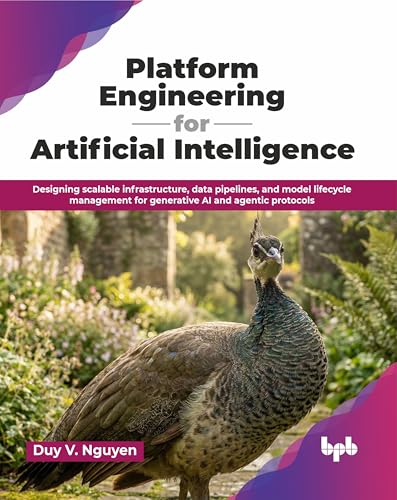
Platform Engineering for Artificial Intelligence: Designing scalable infrastructure, data pipelines, and model lifecycle management for generative AI and agentic protocols (English Edition)
As an affiliate, we earn on qualifying purchases.
As an affiliate, we earn on qualifying purchases.
Key Questions
What makes Inkling different from other foundation models?
Inkling is a large, open-weight, multimodal transformer released under the Apache 2.0 license, allowing free download, modification, and deployment, unlike most proprietary models.
Are there restrictions on how I can use Inkling?
Yes, reports suggest a separate Model Acceptable Use Policy restricts certain applications like surveillance and fully automated decision-making, though details are still emerging.
Will the training data and methodology be available?
No, only the model weights are released openly. The training data and full training pipeline have not been published, which is standard industry practice but limits full transparency.
How does Inkling compare in performance to other models?
According to external benchmarks, Inkling performs strongly on safety and multimodal tasks but is mid-pack on some text-only benchmarks, indicating room for improvement in certain areas.
What are the implications for the AI industry?
This release could encourage more open sharing and democratization of powerful models, but also raises questions about responsible use and enforcement of restrictions.
Source: ThorstenMeyerAI.com