
🔍 Read the full analysis: Maximize Your AI Projects With These External GPUs In 2026 on ThorstenMeyerAI.com

Get hardware and tech essentials delivered free with Prime
- Fast, free delivery on millions of items
- Prime Video, Amazon Music and more included
- Member-only deals all year
TL;DR
In 2026, external GPUs remain a key tool for enhancing AI project performance without hardware upgrades. The Razer Core X V2 is the top overall choice, with options like ASUS ROG XG Mobile and MINISFORUM DEG1 offering specialized benefits. Compatibility, power, and cooling are critical factors for selection.
In 2026, external GPUs (eGPUs) continue to be a popular solution for boosting AI project performance without requiring hardware upgrades to laptops or mini PCs. For a comprehensive overview, see the original analysis on top external GPU options. The Razer Core X V2 is currently regarded as the top overall choice due to its reliable compatibility and robust power delivery, making it suitable for a broad range of users including AI researchers and developers. Learn more about best external GPUs for AI in 2026.
External GPUs allow users to enhance graphics and compute performance by connecting high-end graphics cards via external enclosures. The Razer Core X V2 stands out because of its support for a wide array of graphics cards, high wattage support (up to 650W), and compatibility with Thunderbolt 3 and 4 ports. It offers a balance of performance, build quality, and affordability, making it a preferred option for many AI practitioners.
For gamers and high-end users, the ASUS ROG XG Mobile provides a portable yet powerful solution supporting top-tier graphics cards, while the MINISFORUM DEG1 offers excellent value with support for flagship cards at a lower price point. These options highlight the diverse range of eGPU solutions available in 2026, catering to different priorities such as portability, power, and cost.
Choosing the right eGPU involves considering factors like compatibility with your device’s connection standards—primarily Thunderbolt 3/4 or USB4—power delivery capacity, cooling solutions, and size. For detailed guidance, see AI-powered solutions for optimal hardware setup. High-performance cards require significant wattage and effective thermal management, which influences enclosure selection and overall performance.
The 10 picks
- 1
 ASUS ROG XG Mobile (2025) External Graphics Card with NVIDIA GeForce RTX 5090View on Amazon →
- 2ASUS ROG XG Mobile (2025) External Graphics Card with NVIDIA GeForce RTX 5070 TiView on Amazon →
- 3
 Razer Core X V2 External Graphics Enclosure (eGPU)View on Amazon →
- 4
 AOOSTAR AG02 OCuLink eGPU Dock with 800W PSU and USB4 Port, External GPU Dock…View on Amazon →
- 5
 External GPU Dock Station, Mini eGPU Enclosure Compatible with Thunderbolt 3/…View on Amazon →
- 6
 MINISFORUM DEG1 eGPU Dock, External GPU Docking Station for RTX 4090, AMD RX…View on Amazon →
- 7
 OwlTree PCIe 5.0 x4 128Gbps eGPU Dock for 50 Series Graphics Cards, M.2 NVMe…View on Amazon →
- 8
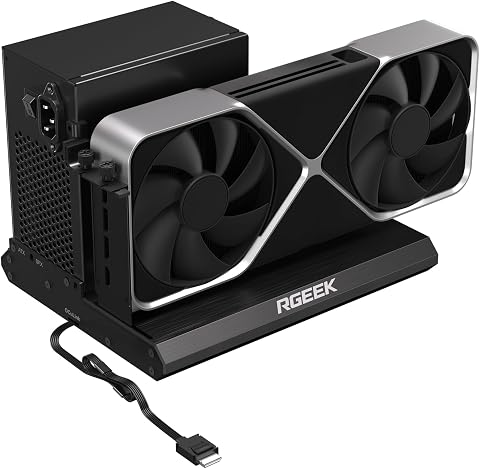 RGEEK OCuLink eGPU Dock PCIe 5.0 x4 for External Graphics CardView on Amazon →
- 9
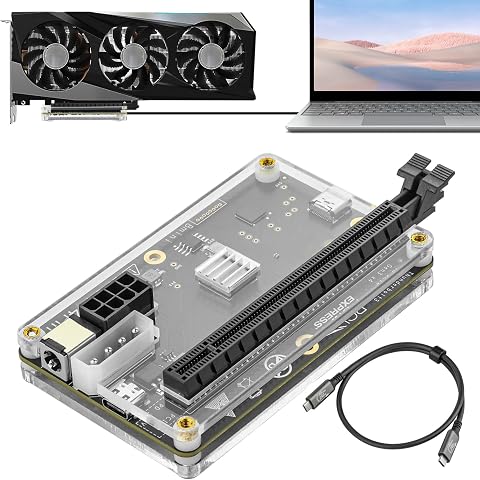 PCIe 3.0 x16 22Gbps eGPU Dock with Thunderbolt 4 Cable for Windows/LinuxView on Amazon →
- 10
 OCuLink eGPU Dock, PCIe 4.0 x4 64Gbps, 19.7-inch SFF-8611 Cable, External GPU…View on Amazon →
Why External GPUs Matter for AI and High-Performance Computing
External GPUs are vital for AI professionals and researchers who need substantial graphics and compute power without replacing their existing hardware. They enable faster training of models, more efficient data processing, and improved visualization capabilities. As AI workloads grow more demanding, the ability to upgrade performance externally becomes increasingly important, especially for users with laptops or mini PCs that lack the internal capacity for high-end GPUs.
Furthermore, the availability of reliable, high-quality eGPU enclosures in 2026 simplifies hardware upgrades, making it easier for users to stay current with the latest GPU technology. This flexibility can extend the lifespan of existing systems and reduce overall costs associated with hardware refresh cycles.
Evolution of External GPU Use in AI Workloads
External GPU technology has advanced significantly over the past few years, transitioning from niche solutions to mainstream tools for professionals. In 2026, compatibility with Thunderbolt 3 and 4 standards remains critical, as these interfaces provide the necessary bandwidth for high-performance computing tasks. The market has seen a rise in enclosures supporting full-sized graphics cards, with improvements in power delivery and thermal management to support intensive AI workloads.
Historically, eGPUs gained popularity among gamers and creative professionals, but their role in AI and machine learning workflows has grown due to increasing demand for portable yet powerful computing solutions. Major manufacturers like Razer, ASUS, and MINISFORUM continue to innovate, offering a range of options tailored to different user needs, from mobility-focused to high-performance stationary setups.
In 2026, the landscape is characterized by a broader selection of enclosures supporting the latest GPU architectures, making it easier for users to assemble or upgrade their AI workstations with external hardware.
“The evolution of external GPUs in 2026 offers AI professionals unprecedented flexibility, enabling high-end compute capabilities without the need for costly internal upgrades.”
— Thorsten Meyer, AI Hardware Expert
Outstanding Questions About eGPU Compatibility and Future Upgrades
While many enclosures support the latest GPU architectures, some users still face compatibility issues with certain laptops or mini PCs, especially regarding BIOS restrictions or port limitations. The long-term durability and thermal performance of some models under sustained AI workloads remain untested, and ongoing firmware updates could impact compatibility.
Additionally, as new connection standards emerge, it is unclear how quickly existing enclosures will adapt or support future hardware upgrades, which could influence long-term investment value.
Upcoming Developments in External GPU Technology and AI Workflows
Looking ahead, manufacturers are expected to release more compact, higher-capacity enclosures supporting the latest GPU architectures, including improvements in cooling and power management. Software updates and firmware enhancements may further improve compatibility and performance stability.
For users, the focus will likely shift toward optimizing workflows with AI-specific hardware accelerators integrated into external enclosures, making external GPUs even more vital for AI research and development in the coming years. Monitoring industry announcements and product launches will be key to staying ahead.
Key Questions
Can I use an external GPU with any laptop?
No, compatibility depends on the presence of Thunderbolt 3/4 or USB4 ports, and some laptops may have BIOS or hardware restrictions that limit external GPU use. Always verify your device’s specifications before purchasing an eGPU enclosure.
Is an external GPU worth it for AI projects?
For AI professionals needing enhanced compute power, an external GPU can significantly improve training times and data processing. Its value depends on your specific workload, device compatibility, and whether you require portability or maximum performance.
What connection standard offers the best performance for eGPUs?
Thunderbolt 3 and Thunderbolt 4 are currently the best options, supporting data transfer rates up to 40Gbps, which are suitable for demanding AI and graphics workloads. USB4 is also promising but may vary in real-world performance depending on the device.
How do I choose the right eGPU enclosure for my needs?
Consider compatibility with your device’s connection ports, the power delivery capacity needed for your GPU, cooling solutions, size, and budget. Balancing these factors will help you select an enclosure that maximizes performance and value for your AI projects.
Source: ThorstenMeyerAI.com
Fall Picks
fall essentials
As an affiliate, we earn on qualifying purchases.