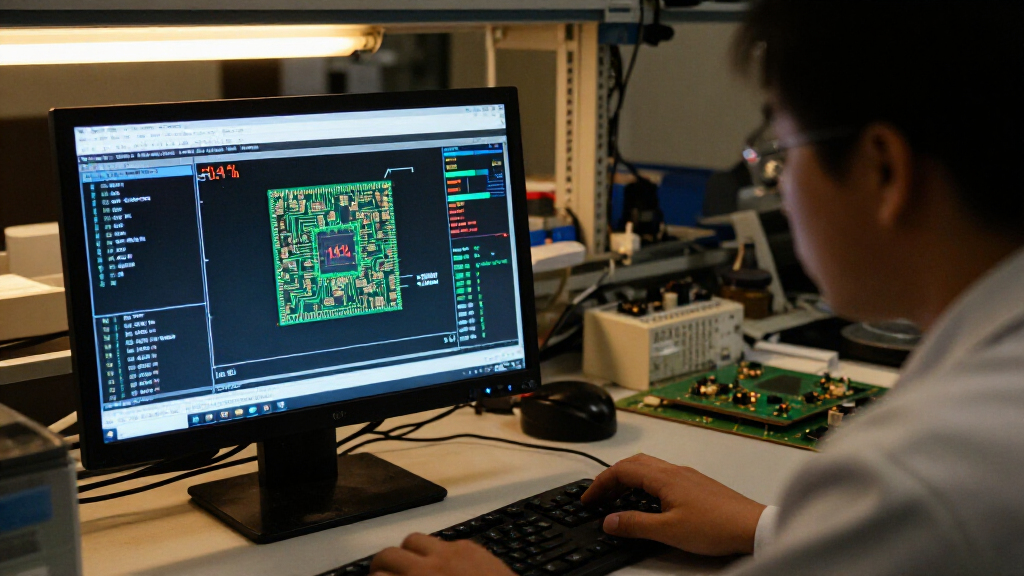
🔍 Read the full analysis: OpenAI’s AMD Chip Design Results: What The Up To 14% Figure Covers on ThorstenMeyerAI.com

Get hardware and tech essentials delivered free with Prime
- Fast, free delivery on millions of items
- Prime Video, Amazon Music and more included
- Member-only deals all year
TL;DR
OpenAI said its models rewrote parts of AMD chip designs and achieved up to 14% improvements in power, performance and area against heavily optimized baselines. The figure is a best-case result from OpenAI; the company has not disclosed the blocks tested or average gains, and no independent audit has been published.
OpenAI said November 18 that its models rewrote sections of AMD chip designs and found up to 14% improvements in power, performance and area (PPA), with some model-generated changes included in a design AMD sent for manufacturing. The headline figure is OpenAI’s account, not an independently audited result: the company has not named the blocks behind the best case or disclosed the average improvement.
OpenAI described the work as a collaboration with AMD using models to revise SystemVerilog register-transfer-level (RTL) code, which specifies how chip circuits behave. According to OpenAI, as reported by ANI and other outlets, Synopsys design tools checked that the proposed rewrites preserved the original behavior and evaluated their PPA trade-offs. The models proposed changes; conventional verification tools, rather than the models alone, were used to test them.
The 14% result applies to AMD’s flagship GPU design and was measured against what OpenAI called “heavily optimised baselines.” OpenAI said some changes had made it into a design AMD sent for manufacturing, while others were added to production design files for future versions. It did not identify the affected blocks, say how much of the chip they represent, or provide an average result across the work.
OpenAI also said AMD had verified single-digit PPA gains in key blocks of its next flagship CPU. Separately, the company reported area reductions in its own Jalapeño inference chip: about 13% in one unit and 10% in another. Accounts differ on the name of the first unit, describing it as a warp engine or vector unit. These are distinct claims and should not be conflated with the AMD GPU’s best-case figure.
AI Tools Move Into Chip Design
The report points to AI being applied not only to software and research, but also to the hardware development process behind future AI systems. If the changes hold through later design and manufacturing stages, they could help chip teams improve performance, power use or silicon area without changing the intended function of a circuit. Those trade-offs affect the cost and capability of processors used to train and run AI models.
For readers, the distinction between a verified RTL rewrite and a finished chip result matters. A design can perform well in early analysis and still face constraints during placement, wiring, manufacturing or operation. OpenAI’s account says some changes reached a design sent for manufacturing, but it does not establish that the reported 14% best case applies to a whole GPU or that the gain has been measured in a finished product.
The financial relationship also warrants attention when weighing the announcement. OpenAI holds a warrant for up to 160 million AMD shares, which vests as AMD chips are deployed, according to the source material. That does not disprove the technical results, but it makes clear why independent evidence and precise reporting of the methods are relevant.
Products Worth Considering

Logitech MX Master 4 Ergonomic Wireless Mouse with Haptics – Graphite

Apple MacBook Pro 14.2-inch with M5 Pro, 15-Core CPU, 16-Core GPU, 24GB Memory, 1TB SSD, Nano-Texture Display, Space Black

LG UltraGear 27-inch QHD OLED Gaming Monitor, 240Hz, 0.03ms, G-SYNC Compatible, FreeSync Premium Pro, HDR True Black 400
As an affiliate, we earn on qualifying purchases.
From RTL Rewrites to Silicon
RTL is an early, code-based description of a chip’s behavior. Engineers can express the same function in different ways, with different consequences for the amount of hardware used, operating speed and power consumption. OpenAI’s models proposed alternative implementations; Synopsys tools were reported to check equivalence and estimate design trade-offs. Later stages turn the logic into a physical layout, placing and wiring components before fabrication.
OpenAI said the AMD GPU comparison was against a design that had already been heavily optimized. That makes the baseline more demanding than an unoptimized starting point. But a strong baseline does not tell readers whether the best result is representative: the reported material does not identify the tested blocks, the number of cases behind the headline figure, or the stage at which PPA was measured.
The announcement also described tests on two open-source RISC-V processor cores, PicoRV32 and Ibex. OpenAI said five models completed 9,881 scored runs, with GPT-6.2 Astra recording the highest score. That benchmark is separate from the AMD results and does not independently verify them. OpenAI president Greg Brockman characterized the AMD work as roughly a year of progress achieved in less than five months, a company estimate rather than a third-party measurement.
“Lisa Su praised the results.”
— AMD chief executive Lisa Su, on X, as quoted by Stocktwits
What the 14% Figure Leaves Out
The precise measurement behind the maximum is not public in the cited accounts. OpenAI has not named the GPU blocks involved, their share of the chip, how many designs or rewrites were assessed, or the typical result. The word “up to” indicates the reported maximum; it should not be read as a chip-wide average.
It is also unclear at which design stage the PPA figure was calculated and whether the reported improvement persisted after physical placement and wiring. The source material says some changes were included in a design AMD sent for manufacturing, but does not specify which changes or publish post-manufacturing measurements. No independent audit or detailed AMD report containing its own figures was cited.
OpenAI’s reports describe Synopsys tools checking functional equivalence and estimating PPA, but do not provide the test setup, tool settings, full results or independent replication. The financial tie between the companies is disclosed in the source material; its effect on the work or reporting is not established. The Jalapeño unit naming also varies across accounts, and OpenAI’s full underlying technical data is not available in the cited reports.
Manufacturing Results and Public Data
The next meaningful evidence would be more detail from OpenAI or AMD on the tested blocks, measurement stage, baseline and distribution of results—not just the best case. A technical report with methods and results that outside researchers can inspect would help clarify how reproducible the gains are. AMD has not published its own figures in the source material.
For the changes already included in a design sent for manufacturing, later evidence could show whether the gains survive fabrication and appear in measured hardware. The announcement does not give a timeline for those results, identify the design’s release date or say when further figures will be made public. Until those details emerge, the 14% remains an OpenAI-reported maximum, while the verified single-digit CPU gains and Jalapeño area reductions remain separate company-reported findings.
Key Questions
What does OpenAI’s “up to 14%” figure measure?
OpenAI said the figure represents a best-case improvement in power, performance and area (PPA) for parts of AMD’s flagship GPU design, compared with heavily optimized baselines. It did not publish a chip-wide average or identify the blocks behind the maximum.
Did AMD confirm a 14% gain?
The cited reports attribute the 14% GPU figure to OpenAI. OpenAI separately said AMD verified single-digit PPA gains in key blocks of its next flagship CPU. The source material does not cite AMD publishing its own detailed figures for either result.
How were the proposed chip changes checked?
OpenAI said its models rewrote RTL code and that Synopsys design tools checked whether the rewrites preserved the original behavior and assessed PPA trade-offs. The models generated proposals; conventional tools performed the reported verification and evaluation.
Have the improvements been measured in manufactured chips?
OpenAI said some model-generated changes were included in an AMD design sent for manufacturing. The cited material does not provide post-manufacturing measurements for that AMD design or establish that the 14% result was achieved in a finished product.
Is the result independently verified?
No independent audit is cited in the source material. The detailed figures and description of the method come from OpenAI’s announcement as reported by news outlets, while the underlying test data and full technical setup have not been published in the accounts provided.
Source: ThorstenMeyerAI.com