Solar generators provide clean, silent power for outdoor adventures, emergency backup, and off-grid living. The best models balance capacity, portability, and charging speed, but tradeoffs are common—larger capacity often means more weight, while compact units may lack runtime. The PowerMax 3600SE stands out as the overall best due to its high wattage and robust solar input, making it suitable for serious power needs. The Jackery Explorer 300 shines for portability and simplicity, perfect for light camping or emergency use. However, buyers face choices between capacity and portability, and between faster charging and longer runtime. Keep reading for a detailed breakdown of top options to match your specific needs.

Get hardware and tech essentials delivered free with Prime
- Fast, free delivery on millions of items
- Prime Video, Amazon Music and more included
- Member-only deals all year
Complete the kit


Key Takeaways
- High-capacity models like the PowerMax 3600SE excel in off-grid scenarios but are heavier and less portable.
- The Jackery Explorer 300 offers a portable, lightweight solution ideal for minimal power needs.
- Solar input capacity varies greatly; larger panels enable faster charging but may add bulk and complexity.
- Budget options often trade off in build quality and runtime, so investing more can yield better reliability.
- Versatility in ports and charging options is a key factor for multi-device use and future-proofing.
| PowerMax 3600SE 3600W Portable Power Station with 2x200W Solar Panels |  | Best Overall for Heavy-Duty Power and Long-Term Reliability | Capacity: 3600Wh | Output Power: 3600W continuous (7200W surge) | Charging Time: 2.4 hours from 0% to 100% | VIEW ON AMAZON | See Our Full Breakdown |
| Jackery Solar Generator 1000 Plus v2 with 2x100W Solar Panel |  | Best for Moderate Home Backup and Expandability | Wattage: 1000 watts | Battery Capacity: 1024Wh | Expandable Capacity: up to 11,000Wh | VIEW ON AMAZON | See Our Full Breakdown |
| ABOK Ark3600 Portable Power Station with 400W Solar Panel, 2000W Solar Input |  | Best for Long-Range Outdoor Adventures and Emergency Prep | Capacity: 3840Wh | Expandable Capacity: up to 11520Wh | Rated Output: 3600W | VIEW ON AMAZON | See Our Full Breakdown |
| ABOK Ark3600 Portable Power Station with 3×200W Solar Panels |  | Best for Rapid Recharging and Heavy-Duty Off-Grid Power | Capacity: 3840Wh | Expandable Capacity: up to 11520Wh | Input Power: 1500W AC, 2000W solar | VIEW ON AMAZON | See Our Full Breakdown |
| Jackery HomePower 3000 and 2x200W Solar Panels |  | Best for Reliable Home and Off-Grid Backup in Compact Form | Capacity: 3072Wh | AC Output: 3600W | Cycle Life: 4,000 cycles | VIEW ON AMAZON | See Our Full Breakdown |
| Jackery Explorer 300 Portable Power Station, 292Wh |  | Best Lightweight and Portable Power Station | Capacity: 292Wh | Weight: 7.5 lbs | Outlets: 2 AC, 1 USB-C PD, 2 USB-A, 1 Car port | VIEW ON AMAZON | See Our Full Breakdown |
| Portable Solar Generator 300W Power Station with 60W Foldable Solar Panel |  | Best for Outdoor Recharging and Flexibility | Wattage: 300W | Battery Capacity: 296Wh | Weight: 6.5 pounds | VIEW ON AMAZON | See Our Full Breakdown |
| Portable Solar Generator 300W with 60W Solar Panel | 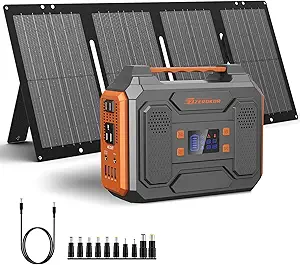 | Best Versatile Charging for Outdoor and Emergency Use | Power Output: 300W | Solar Panel: 60W monocrystalline | AC Outlets: 2 x 300W max | VIEW ON AMAZON | See Our Full Breakdown |
| Jackery HomePower 3600 Plus Portable Power Station with 2x200W Solar Panels |  | Best for Large Capacity and Household Backup | Capacity: 3584Wh | AC Output: 3600W | Parallel Output: 7200W | VIEW ON AMAZON | See Our Full Breakdown |
| Jackery Solar Generator 300 with 40W Solar Panel |  | Best Compact Solar Power for Small Devices | Weight: 7.5 lbs | Capacity: 292Wh | AC Outlets: 2 | VIEW ON AMAZON | See Our Full Breakdown |
| EF ECOFLOW Portable Power Station 3600Wh DELTA Pro, 120V 3600W AC Output | 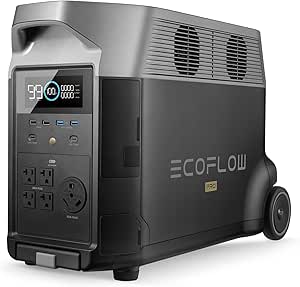 | Best Overall for Home Backup and Versatile Energy Management | Battery Capacity: 3600Wh | Maximum Output: 4500W with X-Boost | Output Ports: 2 USB-A, 2 USB-A Fast Charge, 2 USB-C (100W), 5 AC Outlets, 2 DC Outlets, 1 Car Power, 1 Anderson port | VIEW ON AMAZON | See Our Full Breakdown |
| Jackery Solar Generator 1000 V2 with 200W Solar Panel, 1070Wh, 1500W AC |  | Best for Portability and Quick Charging Outdoors | Capacity: 1070Wh | AC Output: 1500W | Surge Peak: 3000W | VIEW ON AMAZON | See Our Full Breakdown |
| solar generator | Capacity | Weight |
|---|---|---|
| PowerMax 3600SE 3600W Portable | 3600Wh | — |
| Jackery Solar Generator 1000 P | — | 35.4 pounds |
| ABOK Ark3600 Portable Power St | 3840Wh | 92 pounds |
| ABOK Ark3600 Portable Power St | 3840Wh | 92 pounds |
| Jackery HomePower 3000 and 2×2 | 3072Wh | Lightest & Smallest (specific weight not provided) |
| Jackery Explorer 300 Portable | 292Wh | 7.5 lbs |
| Portable Solar Generator 300W | — | 6.5 pounds |
| Portable Solar Generator 300W | — | — |
| Jackery HomePower 3600 Plus Po | 3584Wh | — |
| Jackery Solar Generator 300 wi | 292Wh | 7.5 lbs |
| EF ECOFLOW Portable Power Stat | — | — |
| Jackery Solar Generator 1000 V | 1070Wh | 23.8 lbs |
More Details on Our Top Picks
PowerMax 3600SE 3600W Portable Power Station with 2x200W Solar Panels
This model stands out for its remarkable capacity of 3600Wh and a continuous power output of 3600W, making it an excellent choice for running household appliances or supporting off-grid setups. Compared with the Jackery 1000 Plus, it offers significantly more power, but at the expense of added weight and higher cost. The fast 2.4-hour recharge time, supported by both solar and AC inputs, minimizes downtime, while the LiFePO4 battery ensures over 3500 cycles—roughly a 25-year lifespan—making it ideal for long-term use. Its multiple output ports and smart app control add to its convenience. The main tradeoff is its bulkiness and weight, which reduces portability, and the higher price might be prohibitive for some buyers. This pick is perfect for users needing reliable, high-capacity backup that can handle multiple appliances over extended periods, but less so for those prioritizing lightweight portability.
Pros:- High capacity suitable for large appliances and extended outages
- Fast recharge in just 2.4 hours via solar or AC
- LiFePO4 battery offers over 3500 cycles, ensuring longevity
- Uninterruptible power supply guarantees seamless backup
Cons:- Heavy and bulky, less portable
- Higher price point may deter budget-conscious buyers
Best for: Families or small businesses seeking a durable backup power source with long-term endurance
Not ideal for: Hikers or campers needing lightweight gear, due to its weight and bulk
- Capacity:3600Wh
- Output Power:3600W continuous (7200W surge)
- Charging Time:2.4 hours from 0% to 100%
- Battery Type:LiFePO4
- Cycle Life:3500+ cycles
- Number of Output Ports:14
Our verdict“This is a strong choice for those who prioritize capacity, durability, and long-term use over portability.”
Jackery Solar Generator 1000 Plus v2 with 2x100W Solar Panel
The Jackery 1000 Plus v2 excels in versatility, with a 1024Wh battery that can be expanded to a total of 11kWh by adding extra batteries, making it suitable for both emergency home backup and off-grid adventures. Compared to the PowerMax 3600SE, it offers less capacity but benefits from being lighter and more portable, weighing just 35.4 pounds. Its 1800W AC output is sufficient for most household appliances, and the app control simplifies monitoring. The expandable feature is a major advantage for users who want to start small and grow, but the need to purchase additional battery packs adds to the total cost. Its moderate weight and straightforward setup make it a good middle ground for users wanting more than basic capacity without the bulk of large models. This makes the most sense for those wanting a flexible, scalable power solution that balances capacity with portability.
Pros:- Expandable capacity up to 11kWh for long-term needs
- Reliable UPS functionality for critical devices
- Smart app control for remote monitoring
- Decent 1800W AC output suitable for most appliances
Cons:- Additional batteries cost extra, increasing overall expense
- Relatively heavy for frequent portability
- Setup can be complex for beginners
Best for: Homeowners seeking a scalable backup solution with moderate portability
Not ideal for: Heavy-duty applications requiring sustained high power, as it may need multiple batteries for extended use
- Wattage:1000 watts
- Battery Capacity:1024Wh
- Expandable Capacity:up to 11,000Wh
- Output Wattage:1800W
- Weight:35.4 pounds
- Additional Features:App control, UPS functionality
Our verdict“Ideal for users wanting a scalable, portable power station that can grow with their needs, balancing capacity and ease of use.”
ABOK Ark3600 Portable Power Station with 400W Solar Panel, 2000W Solar Input
The ABOK Ark3600 stands out for its massive 3840Wh capacity, which can be expanded up to 11520Wh—ideal for extended off-grid living or disaster preparedness. It offers multiple charging options, including a 2000W solar input, which supports rapid recharges in sunny conditions. Compared to smaller models like Jackery 1000, its weight of 92 pounds makes it less portable but provides unmatched endurance. The Bluetooth app simplifies remote management, and with 15 output ports, it can power a wide variety of devices simultaneously. The primary tradeoff is its heaviness, making it unsuitable for frequent transport, and the higher cost may not appeal to casual users. This unit is best suited for users needing serious long-term backup or off-grid power. This is a dedicated power solution for those prioritizing capacity and durability over portability.
Pros:- Massive expandable capacity for long-term use
- Fast recharge with 2000W solar input
- Multiple output ports for versatile device powering
- Bluetooth app for remote monitoring
Cons:- Very heavy and less portable
- High initial cost and complexity
- Large size limits mobility
Best for: Off-grid dwellers, emergency preppers, and RV owners needing extended, reliable power
Not ideal for: Hikers or campers requiring lightweight, portable gear due to its weight
- Capacity:3840Wh
- Expandable Capacity:up to 11520Wh
- Rated Output:3600W
- Peak Power:4500W
- Input Power:2000W solar
- Weight:92 pounds
Our verdict“Best suited for those who need a durable, high-capacity power source for extended outdoor or emergency use, accepting limited portability.”
ABOK Ark3600 Portable Power Station with 3×200W Solar Panels
This version of the ABOK Ark3600 emphasizes fast recharging, with a 1500W AC input and up to 2000W solar input, making it suitable for quick turnaround in remote or off-grid settings. Its 3840Wh battery, expandable to 11520Wh, mirrors the previous model but with a focus on rapid recharge capacity, ideal for users who need power on demand. Compared to the Jackery HomePower 3000, it offers a similar capacity but with more emphasis on solar input and faster recharge times. The array of output ports, including high-power AC and diverse USB options, accommodates multiple devices simultaneously. Its heavy weight and high price are tradeoffs, but the quick recharge potential makes it a smart choice for frequent off-grid use or emergency scenarios where time is critical. This pick is best for users who need fast, reliable recharging in demanding outdoor environments.
Pros:- Fast recharge with 1500W AC + 2000W solar input
- High capacity and expandable for long-term needs
- Multiple output ports for diverse device compatibility
- Robust LiFePO4 batteries with over 4000 cycles
Cons:- Heavy and less portable
- Higher cost due to high input capacity
- Setup complexity for less experienced users
Best for: Emergency responders and serious off-grid users who demand rapid recharge capabilities
Not ideal for: Casual campers or those who prioritize lightweight gear, due to its weight and cost
- Capacity:3840Wh
- Expandable Capacity:up to 11520Wh
- Input Power:1500W AC, 2000W solar
- Rated Output:3600W
- Charge Time:1.29 hours with AC + solar
- Weight:92 pounds
Our verdict“Best for users needing quick recharging and high-capacity power in challenging outdoor or emergency conditions, accepting portability constraints.”
Jackery HomePower 3000 and 2x200W Solar Panels
The Jackery HomePower 3000 offers a capacity of 3072Wh combined with a 3600W AC output, making it a capable backup for home essentials or outdoor events. Its lightweight and compact design resemble the portability of the Jackery Explorer series, but with significantly higher capacity. Compared with the PowerMax 3600SE, it is more portable and easier to handle, though it provides slightly less capacity. The fast recharge options—including hybrid AC/DC and pure AC—allow quick turnaround times, and long cycle life ensures durability over years of use. The main limitation is that its solar panels are shipped separately, which could complicate setup and increase initial costs. This model is well-suited for users needing reliable, portable backup without the bulk of larger units. This is a solid choice for those who want a balance of capacity, portability, and ease of use for home or outdoor backup.
Pros:- High capacity with a compact, lightweight design
- Fast recharge with hybrid options
- Long-lasting LiFePO4 batteries with 4000 cycles
- Versatile charging methods for convenience
Cons:- Solar panels are shipped separately, increasing setup complexity
- Limited expansion options compared to larger units
- Price may be higher relative to capacity for some users
Best for: Homeowners or outdoor enthusiasts seeking a reliable, portable backup that’s easy to set up and maintain
Not ideal for: Heavy-duty industrial or prolonged off-grid applications requiring larger capacity or multiple expansions
- Capacity:3072Wh
- AC Output:3600W
- Cycle Life:4,000 cycles
- Recharge Time:1.7 hours via hybrid AC/DC
- Weight:Lightest & Smallest (specific weight not provided)
Our verdict“Great for users wanting a portable, high-capacity backup with quick recharge and manageable size for home or outdoor use.”
Jackery Explorer 300 Portable Power Station, 292Wh
The Jackery Explorer 300 stands out for its impressive portability, weighing only 7.5 lbs, making it ideal for campers and outdoor enthusiasts who need reliable power on the go. Compared with larger models like the Jackery HomePower 3600 Plus, it offers significantly less capacity but excels in ease of transport and quick setup. Its LiFePO4 chemistry supports over 4,000 charge cycles, ensuring durability over years of outdoor use, though its 292Wh capacity limits longer-term or high-power device use. The lack of an included solar panel might be a drawback for true off-grid applications. This pick makes the most sense for users who prioritize mobility and occasional device charging over high capacity or home backup needs.
Pros:- Extremely lightweight and compact for easy transport
- Versatile outlets including AC, USB-C, and car port
- Long-lasting LiFePO4 battery with over 4,000 cycles
Cons:- No included solar panel, requiring additional purchase
- Limited to 300W rated output, restricting high-power devices
Best for: Outdoor adventurers and campers needing lightweight, portable power for small devices.
Not ideal for: Home backup users or those needing to run high-power appliances for extended periods.
- Capacity:292Wh
- Weight:7.5 lbs
- Outlets:2 AC, 1 USB-C PD, 2 USB-A, 1 Car port
- Rated Output:300W
- Peak Surge:600W
- Charge Cycles:4000+
- Dimensions:9.1 x 5.2 x 7.8 inches
- Battery Type:LiFePO4
- Charge Time:4 hours
Our verdict“A perfect choice for those who need portable, reliable power for small devices during outdoor activities.”
Portable Solar Generator 300W Power Station with 60W Foldable Solar Panel
This 300W portable solar generator combines a compact lithium-ion battery with a 60W foldable solar panel, making it suitable for users who value quick setup and multiple charging options. Its 296Wh capacity is comparable to the Jackery Explorer 300, but with the added benefit of included solar recharging, which is absent from the Jackery. The built-in BMS and cooling fan enhance safety, yet performance may decline if not charged regularly or used for larger devices. Its 60W solar panel provides a decent recharging rate, but for continuous off-grid use, larger panels might be necessary. This unit suits adventurers and emergency prepper who want a versatile, all-in-one solution for small device charging outdoors.
Pros:- Includes a foldable 60W solar panel for easy recharging
- Multiple output ports with safety features
- Fast charging via AC, solar, or car power
Cons:- Solar panel not included in the main package
- Limited to 300W power output, unsuitable for high-demand devices
Best for: Campers and outdoor enthusiasts seeking a compact, solar-ready power source.
Not ideal for: Users needing to power high-wattage appliances or for prolonged home backup use.
- Wattage:300W
- Battery Capacity:296Wh
- Weight:6.5 pounds
- Dimensions:9 x 5.5 x 7.5 inches
- Solar Panel Power:60W
- Input Voltage:12-25V
- Charging Time:3 hours
- Output Ports:2 AC, 2 DC, USB, USB-C
Our verdict“An excellent portable solar generator for outdoor use and quick recharging, especially when solar is available.”
Portable Solar Generator 300W with 60W Solar Panel
The 300W portable solar generator with a 60W solar panel offers a balanced mix of portability and functionality. Its 300W capacity makes it suitable for smartphones, laptops, and small appliances, comparable to the Jackery Explorer 300. The inclusion of a foldable solar panel and multiple charging options—including AC, car, and solar inputs—provides flexibility in off-grid scenarios. The high conversion efficiency (20.5%) enhances solar charging performance, yet performance can dip if not maintained regularly. Its built-in BMS and cooling fan improve safety, but the device isn’t waterproof, limiting outdoor durability. This unit appeals to those who want a reliable, all-in-one power solution for outdoor activities or short-term emergencies.
Pros:- High solar conversion efficiency of 20.5%
- Multiple charging options including AC, solar, and car
- Built-in BMS and cooling fan for safety and temperature control
Cons:- Performance may decline if not regularly charged
- Not waterproof, limiting outdoor durability
Best for: Outdoor users needing a versatile, efficient power source with multiple charging options.
Not ideal for: Those requiring sustained high-power output or long-term off-grid power for large appliances.
- Power Output:300W
- Solar Panel:60W monocrystalline
- AC Outlets:2 x 300W max
- USB Ports:3 x 5V/3A, 1 quick charge
- DC Port:9V-12.6V/10A max
- Battery Management System:Yes
- Conversion Efficiency:20.5%
- Included Accessories:AC adapter, car cable, solar kit
Our verdict“A versatile, efficient choice for outdoor enthusiasts who want multiple charging options in one compact package.”
Jackery HomePower 3600 Plus Portable Power Station with 2x200W Solar Panels
The Jackery HomePower 3600 Plus offers substantial capacity at 3584Wh and a 3600W AC output, making it well-suited to backup household essentials during outages. Compared to the PowerMax 3600SE with similar wattage, the Jackery’s lighter, luggage-style design with wheels and a telescopic handle enhances portability. Its rapid charge time of just 2 hours via AC+DC, along with a lifespan of 6,000 cycles, makes it a durable choice for prolonged use. However, the solar panels are shipped separately, which adds complexity to setup and may delay initial use. This model fits buyers needing large capacity and mobility for home or small business backup, though it might be too heavy for frequent transport without wheels.
Pros:- High capacity with fast 2-hour charge time
- Luggage-style design with wheels and handle for portability
- Long lifespan of 6,000 cycles and 10 years
Cons:- Solar panels are shipped separately, complicating setup
- Potentially heavy for frequent transport without wheels
Best for: Homeowners and small businesses seeking a portable, high-capacity backup system with quick charging.
Not ideal for: Users looking for a compact, lightweight emergency power source for occasional use.
- Capacity:3584Wh
- AC Output:3600W
- Parallel Output:7200W
- Voltage:120V & 240V in parallel
- Lifespan:6,000 cycles
- Charge Time (AC+DC):2 hours
- Design:Luggage-style with wheels and handle
Our verdict“Ideal for those who need large, reliable backup power with mobility for home or small business use.”
Jackery Solar Generator 300 with 40W Solar Panel
The Jackery Solar Generator 300 paired with a 40W solar panel is a lightweight solution perfect for quick recharges of phones, tablets, and small gadgets. While its capacity of 292Wh mirrors the Explorer 300, the added 40W solar panel enables off-grid charging, making it ideal for short camping trips or emergency use. Its design emphasizes portability, but the smaller solar panel results in longer charging times—up to 7.5 hours for 80% with a 40W panel. It is less suited for powering larger appliances or extended off-grid stays. This unit appeals most to users who prioritize portability and moderate solar recharging for small devices.
Pros:- Lightweight and easy to carry
- Multiple outlets including USB-C PD
- Long cycle life with LiFePO4 battery
Cons:- Limited capacity, not suitable for large devices
- Requires solar panels for off-grid power, shipped separately
Best for: Campers and emergency kit owners needing a small, portable power source for phones and small electronics.
Not ideal for: Users needing to run larger appliances or power for extended periods off-grid.
- Weight:7.5 lbs
- Capacity:292Wh
- AC Outlets:2
- USB-C PD Port:100W
- USB-A Ports:2
- Car Port:120W
- Charge Cycles:over 4,000
- Peak Surge:600W
Our verdict“A compact, portable power station best suited for small device charging and quick outdoor recharges.”
EF ECOFLOW Portable Power Station 3600Wh DELTA Pro, 120V 3600W AC Output
The EF ECOFLOW DELTA Pro stands out for its massive 3600Wh capacity, making it ideal for home backup needs or extended outdoor adventures. Compared with the Jackery Solar Generator 1000 V2, which offers a smaller 1070Wh, the DELTA Pro provides a significant advantage for longer use without recharging. Its rapid recharge times—under 3 hours via solar or wall—are a major plus, especially for those who want quick turnaround times. The extensive array of output ports, including multiple USB-C and AC outlets, makes it a flexible choice for powering various devices simultaneously. However, this capacity and versatility come with the tradeoff of increased size and weight, which could be cumbersome for portability. Also, the price isn’t specified, but the high capacity and features suggest a premium cost. Overall, this makes the most sense for users prioritizing reliability, expandability, and remote management, like homeowners or serious campers who need a dependable power source.
Pros:- Massive 3600Wh capacity suitable for home backup and extended outdoor use
- Fast recharging via solar or wall outlets in under 3 hours
- Multiple output options including AC, USB-C, and DC ports for versatile device charging
- Smart app control for monitoring and managing energy remotely
Cons:- Heavy and bulky, making portability challenging
- Price not specified, potentially expensive for casual users
Best for: Homeowners seeking reliable backup power and outdoor enthusiasts who value expandability and remote control.
Not ideal for: Lightweight travelers or those needing a portable, compact solution for small devices, due to its size and weight.
- Battery Capacity:3600Wh
- Maximum Output:4500W with X-Boost
- Output Ports:2 USB-A, 2 USB-A Fast Charge, 2 USB-C (100W), 5 AC Outlets, 2 DC Outlets, 1 Car Power, 1 Anderson port
- Recharge Time:1.8 hours (240V), 2.7 hours (1800W wall), 2.8 hours (solar)
- Expansion Capacity:Up to 25kWh with extra batteries or smart generators
- Charging Methods:EV station, solar, wall outlets, outdoor generator, car outlet
- App Control:Yes, via Wi-Fi or Bluetooth
Our verdict“This power station is best suited for users who need reliable, expandable power with remote management, despite its size and cost.”
Jackery Solar Generator 1000 V2 with 200W Solar Panel, 1070Wh, 1500W AC
The Jackery Solar Generator 1000 V2 makes a compelling case for outdoor adventurers needing a portable yet capable power source. With a 1070Wh capacity and 1500W AC output, it comfortably handles multiple devices, similar to the EF ECOFLOW DELTA Pro, but in a significantly lighter package. Its fast charging ability—just 1 hour—outpaces most competitors, making it ideal for quick recharges between outings. The inclusion of a 200W solar panel enhances its eco-friendliness and independence from wall outlets. While the solar panel and generator are shipped separately, this modular setup offers flexibility but may inconvenience users seeking an all-in-one solution. The battery’s LFP chemistry promises over 10 years of life, adding long-term value. However, the need for an app to enable fast charging and the restriction against PO Box deliveries might frustrate some buyers. Overall, this pick suits active users who prioritize portability, durability, and rapid recharging for outdoor use.
Pros:- High capacity of 1070Wh suitable for multiple devices
- Fast charging in just 1 hour enhances usability on the go
- Lightweight (23.8 lbs) with foldable handle for portability
- Durable LFP battery with over a decade lifespan
Cons:- Solar panel and generator shipped separately, adding setup complexity
- Requires app activation for fast charging features, which may be inconvenient
Best for: Outdoor enthusiasts and road trippers who need a lightweight, durable power station with fast charging and solar options.
Not ideal for: Home users or those needing massive backup capacity, as it won’t sustain prolonged outages or large appliances.
- Capacity:1070Wh
- AC Output:1500W
- Surge Peak:3000W
- Weight:23.8 lbs
- Ports:2 USB-C, 1 USB-A, 1 DC car port, 3 AC ports
- Battery Type:LFP
- Charging Time:1 hour (fast), 3 hours (standard)
Our verdict“This model excels for active users needing a portable, fast-charging power station with long-lasting battery life, though it’s less suited for extensive home backup needs.”

How We Picked
Our evaluation focused on performance, durability, usability, and value. We prioritized models with reliable solar input and output power, ensuring they can handle real-world demands. Ease of use, such as clear displays and simple controls, played a key role, along with build quality for durability in outdoor environments. We also considered capacity relative to size and weight, aiming to recommend options that suit different levels of power needs—from portable light-use units to heavy-duty systems. The rankings reflect a balance of these factors, highlighting models that offer the best combination of power, portability, and value for specific user scenarios.
Factors to Consider When Choosing Solar Generators
Choosing the right solar generator involves weighing several factors, each impacting your experience and the value you get. Beyond raw capacity, consider how portable the unit is, how fast it charges from solar or mains, and whether it has the necessary ports for your devices. Understanding these aspects helps avoid common pitfalls like overestimating your power needs or selecting a model that’s too bulky for your intended use. Here are the key considerations to keep in mind:Capacity and Power Output
Capacity, measured in watt-hours (Wh), determines how long your devices can run, while the inverter wattage indicates the maximum power draw. For example, a small portable power station with 300Wh is suitable for charging phones and small devices, but won’t run high-wattage appliances. Larger models, like the PowerMax 3600SE, can power larger devices or multiple appliances simultaneously. Matching your power needs with capacity and inverter specs prevents underperformance or overpaying for unused capacity.
Portability and Size
Not all solar generators are created equal in weight and size. Lightweight, compact units are perfect for camping and emergency kits, but often come with lower capacity. Larger, high-capacity models provide more power but are heavier and less convenient to transport. Consider how you’ll use the generator—if mobility is a priority, opt for a smaller model, but for home backup or RV use, a bulkier system might be justified. Balance your portability needs with the amount of power required.
Solar Input Capacity
The rate at which a solar generator recharges depends on the solar input wattage. Higher input ratings, like 400W or more, enable faster recharging, reducing downtime between uses. However, larger solar panels add bulk and cost, and may require more setup effort. For quick recharges during the day, look for models compatible with high-wattage panels. For occasional or emergency use, lower input capacity may suffice, especially if you’re not in a rush to recharge.
Charging Methods and Speed
Most solar generators can be charged via AC outlets, car chargers, or solar panels. The charging speed and flexibility impact how quickly you regain power, especially during extended outages or remote trips. Some models, like the Jackery Explorer 1000 V2, support fast AC charging, while others rely solely on solar, which can take longer depending on sunlight conditions. Consider your typical usage scenario—if you need quick turnaround times, prioritize models with faster charging options.
Build Quality and Durability
Durability is essential for outdoor use; look for sturdy casings, quality connectors, and well-protected ports. Cheaper models might save costs but often lack weather resistance or rugged features, risking damage during transport or harsh conditions. Additionally, reliable battery life and inverter longevity contribute to long-term value. Investing in a well-built unit can save money and frustration over time, especially if you plan to rely on it in emergencies or rugged environments.
Frequently Asked Questions
Can I run my refrigerator off a solar generator?
Running a refrigerator from a solar generator depends on the appliance’s power draw and the generator’s capacity. Most refrigerators require a surge of power at startup, so a model with a high inverter wattage, such as 1500W or more, is necessary. Additionally, you’ll need sufficient capacity in watt-hours to keep it running for the desired duration. For extended use, a high-capacity generator paired with ample solar input is recommended, but for short outages or small fridges, smaller units might suffice.
How long does it take to fully recharge a solar generator?
The recharge time depends on the generator’s solar input capacity and sunlight conditions. For example, a unit with a 200W solar input under optimal sunlight might recharge in 4-6 hours, but cloudy weather can significantly extend this. Some models also support AC charging, which can fully recharge in 2-4 hours, making them suitable for quick turnaround. Planning for recharge times based on your typical sunlight availability helps ensure your generator stays ready when needed.
Is it worth paying extra for a higher-capacity or faster-charging solar generator?
Investing in a higher-capacity or faster-charging model can be worthwhile if you depend on reliable power for longer periods or need to recharge quickly during outages or outdoor trips. The added capacity ensures your devices run longer without recharging, while faster solar input speeds up the recharging process. However, these models tend to be bulkier and more expensive. If your needs are light or occasional, a smaller, more affordable unit may be sufficient, offering better value for casual use.
Should I prioritize solar input capacity or battery capacity?
The choice depends on your typical use case. If you expect to recharge your generator frequently with abundant sunlight, prioritize models with higher solar input capacity for faster recharging. Conversely, if you need longer runtime between charges and have limited sunlight, a larger battery capacity becomes more important. Ideally, a balance between the two offers the best overall experience, allowing for quick recharges and extended use without excessive weight or cost.
What features should I look for to future-proof my solar generator?
To future-proof your investment, look for models with versatile port options such as USB-C, AC, DC, and RV hookups, so you can connect a wide range of devices. Support for high-wattage solar panels and fast charging capabilities also extend usability. Additionally, choosing units with upgradeable batteries or modular designs can help adapt to evolving power needs. Reliable manufacturer support and good warranty coverage further ensure the generator remains a dependable part of your emergency or off-grid setup.
Conclusion
For most users, the PowerMax 3600SE offers the best overall mix of capacity, solar input, and durability, making it suitable for serious off-grid power. The Jackery Explorer 300 is an excellent choice for beginners, light camping, or emergency kits thanks to its portability and simplicity. Those seeking high capacity and quick recharging should consider premium options like the EF ECOFLOW DELTA Pro. Budget-conscious buyers will find good value in smaller models like the Jackery Solar Generator 1000 V2 or the Portable Solar Generator 300W series. Ultimately, your specific needs—whether portability, power, or cost—should guide your choice among these top solar generators.
Fall Picks
fall essentials
As an affiliate, we earn on qualifying purchases.