Die EU kündigt €200 Mrd. für KI an, doch nur ein Bruchteil ist echtes Budget. Der Fokus liegt auf Mobilisierung privater Investitionen, nicht auf sofortiger Ausgabe.
Browsing Category
Economics
69 posts
The Menu: What Ten Answers Reveal
Analyzing ten jurisdictions’ approaches to automation, income, and work reveals diverse models and shared challenges in managing the transition to a post-labor economy.
The Menu: What Ten Answers Reveal
A detailed analysis of ten jurisdictions’ approaches to automation, income, and work, revealing diverse strategies and their implications for the future.
Brazil: Pay the Family, Mind the Child
Brazil’s Bolsa Família program links cash transfers to child health and education, aiming to reduce poverty and inequality. Its impact and limits are under review.
India: Build the Rails First
India’s approach focuses on building scalable digital rails like Aadhaar and UPI before expanding benefits, aiming to deliver services efficiently at scale.
After the Paycheck: The Book I Wrote Because Nobody Else Would Tell the Truth About AI and Your Income
Author Thorsten Meyer releases ‘After the Paycheck,’ analyzing how AI transforms labor, ownership, and the economy, emphasizing ownership as the key issue.
China: The Visible Hand
China is actively directing its AI, robotics, and supply chain sectors through state-led plans, emphasizing control and strategic growth over individual welfare.
Singapore: Engineer the Transition
Singapore’s approach to economic and workforce transformation relies on precise, well-funded policies targeting skills, AI, and productivity, emphasizing continuous reskilling.
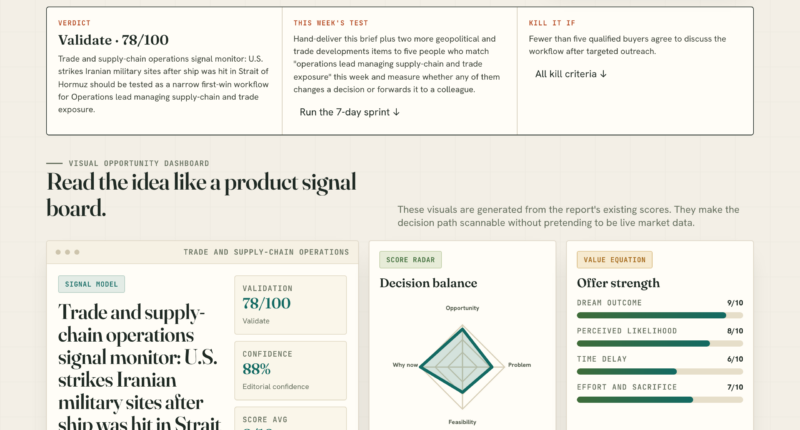
Trade and supply-chain operations signal monitor: U.S. strikes Iranian military sites after ship was hit in Strait of Hormuz
The U.S. has launched strikes on Iranian military targets following an attack on a ship in the Strait of Hormuz, raising geopolitical tensions and supply chain concerns.
The Gulf: Own the Capital
Gulf states are investing heavily in AI infrastructure, aiming to own the next economy and distribute wealth through capital ownership, unlike Western models.