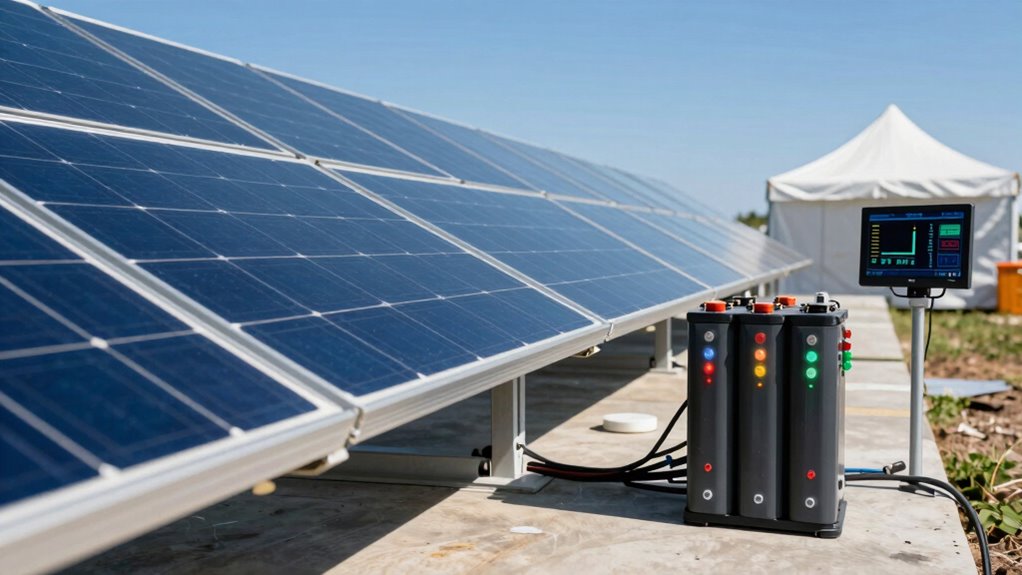

To size a solar backup for miner downtime, first determine your total daily energy consumption of your mining equipment. Then, calculate the battery capacity needed, adding about 20% safety margin for future growth and inefficiencies. Make sure your inverter can handle both continuous load and startup surges, matching it slightly above peak demand. Ensuring proper component sizing and monitoring will maximize reliability. Keep exploring how each step fits together to build an effective solar backup system.
Key Takeaways
- Calculate total daily energy consumption of mining equipment and add a buffer for inefficiencies and future growth.
- Size the battery capacity to cover backup duration, including safety margins and system losses.
- Ensure inverter capacity exceeds peak power demand, accounting for startup surge requirements.
- Use smart energy management and monitoring systems to optimize performance and maintain reliability.
- Match battery capacity and inverter size to the load profile for continuous and surge power needs.
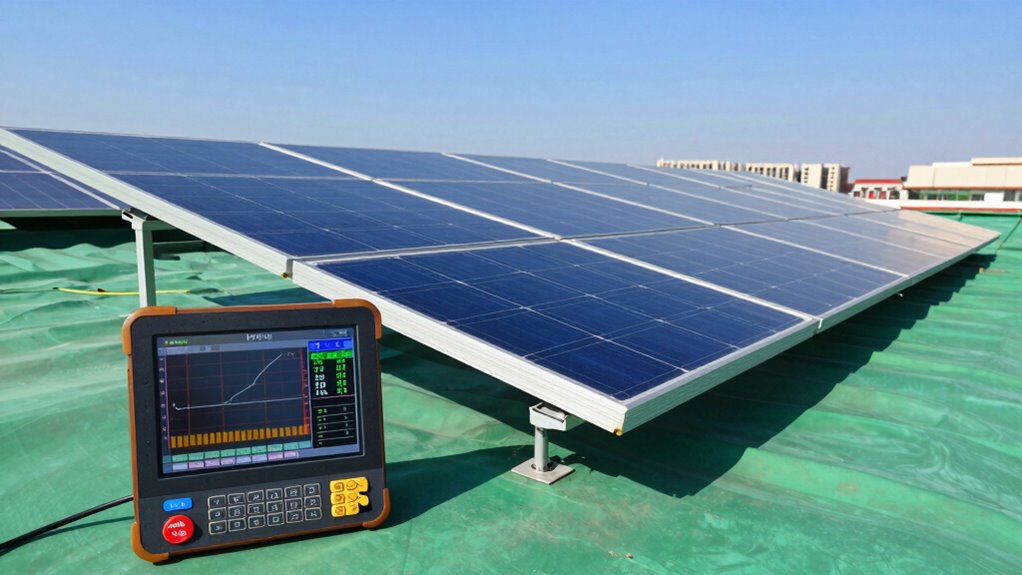
Are you looking to guarantee your mining operations stay online during power outages? If so, understanding how to properly size a solar backup system is essential. The first step is evaluating your power needs. You need to determine the total energy your mining equipment consumes daily, which helps you decide on the necessary battery capacity to support continuous operation. Battery capacity is measured in kilowatt-hours (kWh), and selecting the right size ensures your system can keep your miners running during outages without overinvesting in unnecessary storage. To accurately estimate this, multiply your miners’ power draw by the number of hours you want to back up. For example, if your miners use 5 kW each and you want a backup for 8 hours, you’ll need at least 40 kWh of battery capacity (5 kW x 8 hours). Keep in mind, it’s wise to add a buffer—about 20%—to account for inefficiencies and future growth.
Next, inverter sizing plays an essential role in guaranteeing your backup system functions smoothly. The inverter converts stored DC power from your batteries into AC power your miners require. You need to match the inverter’s capacity to your peak power demand. If your mining setup draws 10 kW at peak, choose an inverter rated slightly above that to prevent overloads and ensure longevity. Proper inverter sizing isn’t just about capacity; it also involves considering surge power. Mining equipment often has a startup surge that can be several times higher than its running power. Your inverter should handle this surge without tripping. Therefore, selecting an inverter with a surge rating at least 2-3 times your continuous load is recommended. Additionally, understanding smart energy management can help optimize your backup system’s performance and efficiency. Incorporating system monitoring can also provide valuable insights into energy consumption and system health, further enhancing reliability. Implementing proper system efficiency strategies can significantly impact the overall backup duration and operational stability. It’s also important to consider how system efficiency impacts overall backup duration and performance.
Balancing battery capacity and inverter sizing is essential. An undersized inverter will restrict your system’s ability to handle peak loads, while insufficient battery capacity might not provide enough backup time. Both components must be matched to your specific load profile, considering both average and maximum power demands. Additionally, don’t forget to factor in the efficiency of your system components; not all stored energy makes it to your miners. Properly sizing your solar backup system involves detailed calculations and understanding your mining operation’s unique power profile. By carefully selecting the right battery capacity and inverter size, you guarantee reliable operation during outages, protect your investment, and keep your mining activity profitable without interruption.
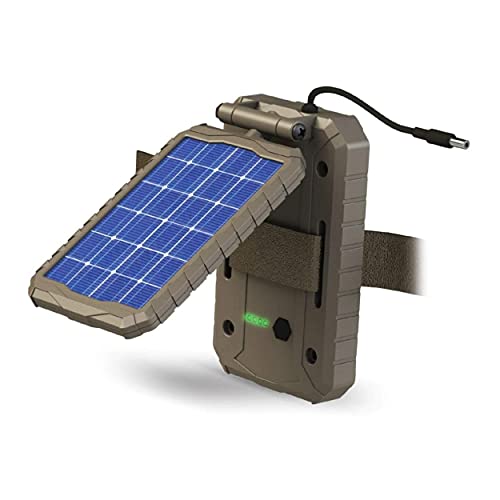
Stealth CAM Durable Sol-Pak Solar Battery Pack, 12V Solar Power Panel, Rechargeable Battery & 10ft Insulated Cable, Compatible with All Wireless/Cellular Trail Cameras – 3000 mAh
EXTENDED CAMERA FIELD LIFE – Embrace renewable energy, eliminating the need for traditional batteries and ensuring a cost-effective…
As an affiliate, we earn on qualifying purchases.
As an affiliate, we earn on qualifying purchases.
Frequently Asked Questions
How Does Weather Variability Affect Solar Backup Efficiency?
Weather variability impacts your solar backup efficiency because changing weather patterns and cloud coverage reduce sunlight reaching your panels. On cloudy days, less energy is generated, which might lead to insufficient backup power during miner downtime. You need to account for these fluctuations when sizing your system, ensuring it can handle periods of low sunlight. Properly designing your backup system helps maintain reliable mining operations despite unpredictable weather conditions.
What Are the Long-Term Maintenance Costs of Solar Backup Systems?
Your solar backup system’s long-term costs are like planting a forest—you’ll face ongoing maintenance. Battery degradation gradually lowers performance, requiring replacements over time. System scalability means adding more panels or batteries as your needs grow, increasing costs. Expect regular inspections, cleaning, and occasional component upgrades. While initial investments are significant, proper upkeep guarantees your system runs efficiently for years, making it a worthwhile, resilient energy solution.
Can Solar Backups Be Integrated With Existing Mining Infrastructure?
Yes, you can integrate solar backups with your existing mining infrastructure. You’ll need to incorporate battery storage to manage energy supply, guaranteeing your system can handle downtime or fluctuations. Grid integration allows seamless switching between solar power and the main grid, optimizing efficiency and reliability. Proper planning and technical adjustments help guarantee your mining operations benefit from renewable energy, reducing costs and increasing sustainability without disrupting existing setup.
What Is the Typical Lifespan of a Solar Backup System?
Sure, your solar backup system will last forever—just like your hope for a trouble-free mining operation. In reality, expect about 25-30 years, but battery longevity varies, often needing component upgrades over time. Regular maintenance and technological updates extend system life, ensuring your investment keeps powering your mining dreams longer. After all, longevity isn’t just about years; it’s about staying relevant in a rapidly evolving energy landscape.
How Quickly Can a Solar Backup Be Deployed in an Emergency?
In an emergency, you can deploy a solar backup quickly with rapid installation methods. Emergency deployment is designed for speed, often allowing setup within a few hours to a day, depending on system size and site conditions. Using pre-assembled components and modular designs, you minimize installation time, ensuring your miner stays operational during unexpected downtime. Proper planning and having ready-to-install kits help you respond swiftly and efficiently.

Aninerel 12000W Solar Hybrid Inverter 48V DC to 120V/240V AC Single Phase Split Phase Power Inverter, Pure Sine Wave, Built-in 2 MPPT Controller, Max. 220A Battery Charging, Parallel 6 Units, UL1741
𝟏𝟐𝟎𝟎𝟎𝐖 𝐎𝐮𝐭𝐩𝐮𝐭 & 𝐅𝐥𝐞𝐱𝐢𝐛𝐥𝐞 𝐕𝐨𝐥𝐭𝐚𝐠𝐞: Converts 48V DC power from solar panels or batteries to 120V single-phase /…
As an affiliate, we earn on qualifying purchases.
As an affiliate, we earn on qualifying purchases.
Conclusion
Now that you know how to size a solar backup, you’re empowered to guarantee your mining operation never misses a beat. With careful calculation and clever configuration, you can create a cost-effective, consistent, and confident backup system. Don’t delay—design, define, and deploy your solar solution today. Secure your supply, safeguard your success, and stay steadfast in the face of fluctuations. Your future in mining begins with a well-wired, well-worn way to weather any downtime.
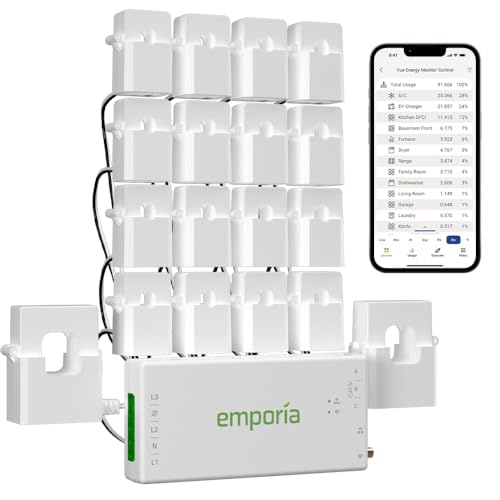
Emporia Vue 3 Home Energy Monitor – Smart Home Automation Module and Real Time Electricity Usage Monitor, Power Consumption Meter, Solar and Net Metering for UL Certified Safe Energy Monitoring
SAFETY YOU CAN TRUST WITH UL CERTIFICATION: With Emporia Energy, your home energy monitoring is safe, reliable, and…
As an affiliate, we earn on qualifying purchases.
As an affiliate, we earn on qualifying purchases.

GOLDENMATE 1000VA/800W Lithium UPS Battery Backup and Surge Protector, Backup Battery Power Supply with LiFePO4 Batteries(230.4 Wh), Sinewave UPS System, 10 Years Lifespan, 8 Outlets, LCD Display
[LiFePO4 Battery, Ultra-long Endurance]: This lithium UPS is equipped with a state-of-the-art Lithium Iron Phosphate Battery Pack, delivering…
As an affiliate, we earn on qualifying purchases.
As an affiliate, we earn on qualifying purchases.